The Car
A 1928 Ford Model A Sport Coupe — two-tone paint, wire wheels, rumble seat, and nearly a century of history.
Print Vehicle Dossier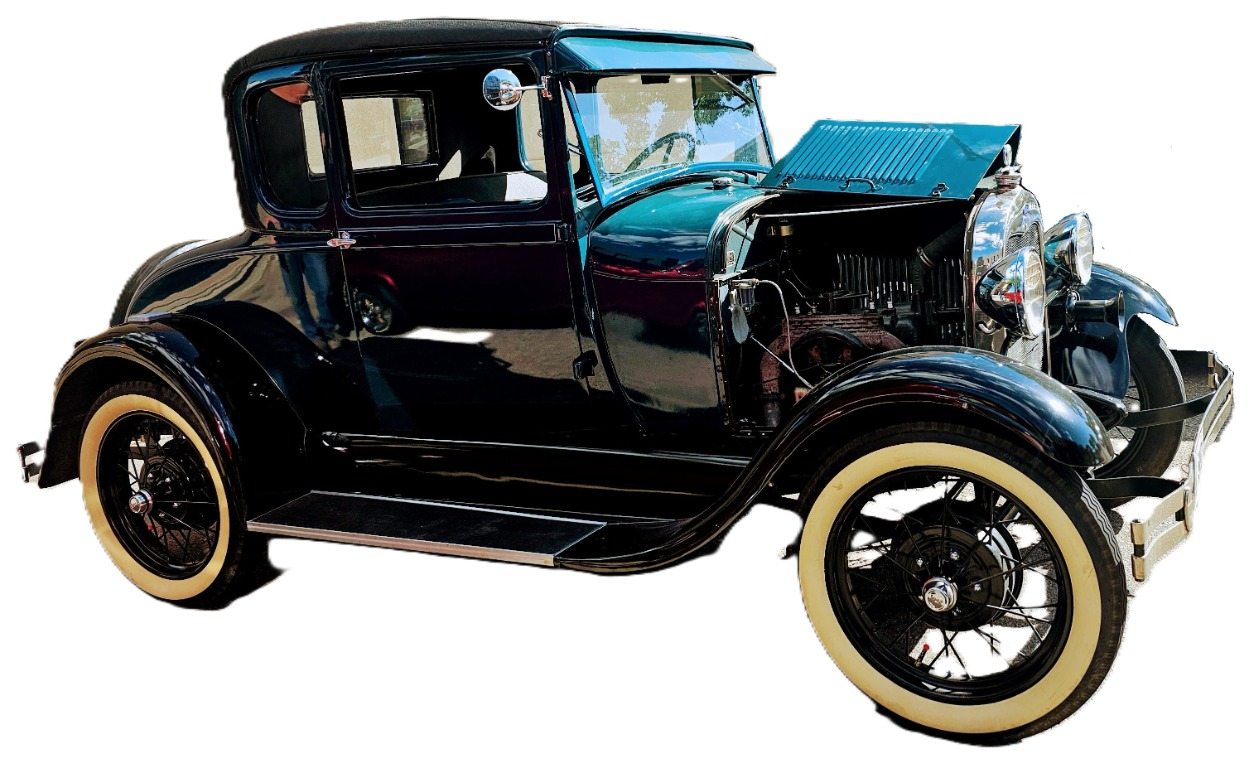
Vehicle Specs
| Year | 1928 |
|---|---|
| Make | Ford |
| Model | Model A |
| Body Style | Sport Coupe (with rumble seat) |
| Engine | 201 cu in inline-four, 40 hp |
| Transmission | 3-speed manual |
| Color | Niagara Blue & Black (two-tone factory option) |
| Fenders | Black |
| Wheels | Wire spoke with whitewall tires |
| Condition | Restored — excellent |
Body Style
This is a Sport Coupe, one of the most stylish body styles Ford offered on the Model A. It features a fixed closed roof, a 3-window profile, two doors, and a rumble seat in the rear — an open-air seat for two additional passengers, accessed by lifting the rear deck lid. The Sport Coupe was a popular choice among buyers who wanted a little more flair than the standard Coupe.
Paint & Finish
The car wears a handsome two-tone combination: a deep teal/blue-green — believed to be Niagara Blue, one of the four standard 1928 Model A factory colors — on the lower body, with a black upper cowl, roof, and fenders. A pinstripe runs just below the window line, cleanly separating the two tones. The wire-spoke wheels are fitted with period-correct whitewall tires.
The paint is in excellent condition — deep, glossy, and well-maintained — reflecting the care that has gone into the car's restoration.
Mechanical
The Model A's 201 cubic inch inline-four engine produces 40 horsepower at 2,200 rpm — modest by modern standards, but more than adequate for the era and still capable of highway driving today. The three-speed sliding-gear transmission was a modern departure from the Model T's planetary gearbox, and gives the car a familiar, conventional driving feel.
Known History
The ownership history prior to coming into our family is still being researched. Details will be added here as they are discovered. See the Restoration Log for documented work on the car, and the Timeline for a broader historical context.